Portfolio Update (5/12/2022)
Managing assets through macro regime change

I want to bring together the various topics / discussion threads I’ve been writing about over the past few months and summarize how my portfolio is positioned at the moment. Earlier in March, I warned that a combination of supply-side inflationary shocks, negative fiscal impulse and a Fed that was behind the curve was going to result in a treacherous landscape for risk assets. I warned about earnings growth erosion and a potential hawkish surprise from the Fed. In terms of portfolio management I recommended keeping elevated levels of cash, having some market shorts as a hedge and shorting high growth / unprofitable tech stocks, in particular the ARKK ETF. I wrote:
“In light of these risks, I have been running my portfolio with elevated levels of cash and with more of a ‘trading’ approach where I take risk on / off quickly depending on recent developments and market structure/ technicals. I also initiated shorts on the broader market and tech stocks as a market beta hedge. My favorite short has been the ARKK ETF given its composition of over valued / non profitable tech and software names that will continue to underperform in a rate hiking cycle.”
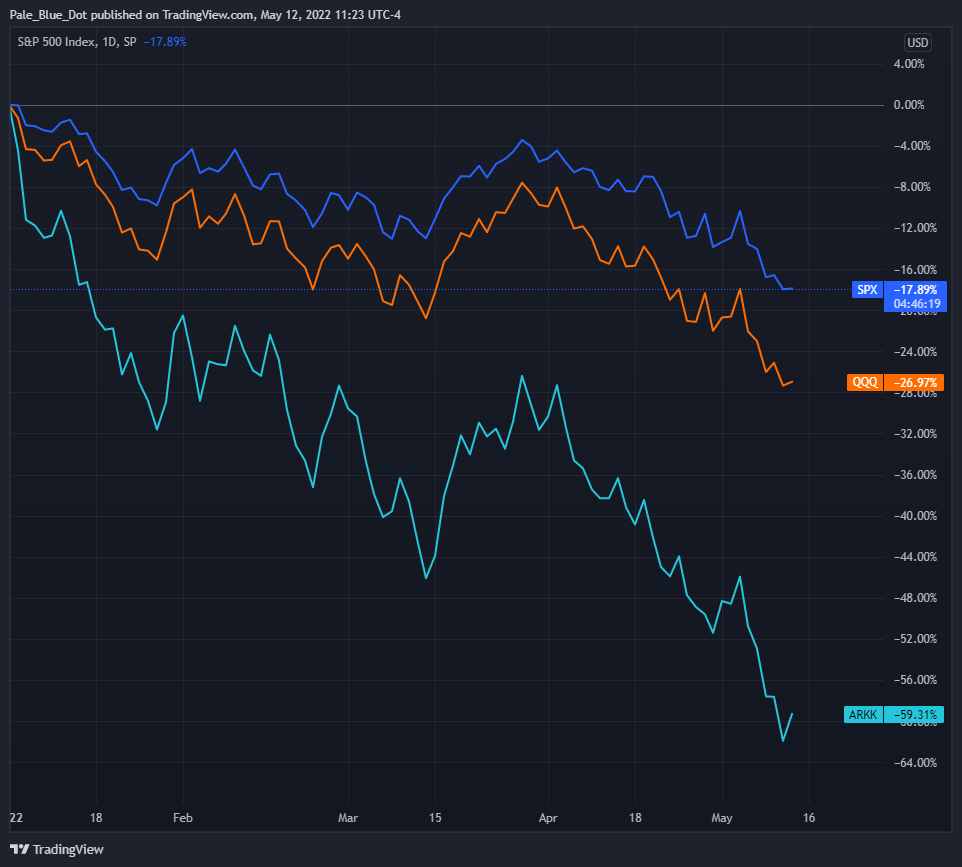
Since then ARKK is down roughly 30%, QQQ down ~10% and the SPX down 5.5%. YTD performance as of this writing is -59%, -27% and -18% respectively. These numbers don’t fully reflect the pain retail investors and hedge funds are suffering as a number of individual technology names have lost more than two-thirds of their market value in recent months. Investors are recognizing that many of these stocks have been propped up by false narratives around growth, competitive advantage and the illusion of long term profitability. I discussed this recently and continue to believe that there is more pain ahead as the equity value of many of such companies will eventually prove to be worth zero, or close to zero.
From a tactical perspective I’ve taken profits on most of my short positions as I’m expecting a bounce in the coming weeks that allows SPX to recover 4000. But market timing is not my strong suit, so I’ve left some long-dated (5-6 mos) out-of-the-money put options on ARKK, QQQ and SPY as ‘runners’ that should have an asymmetric payoff in the case of a rapid market crash.
On the long side I’ve been a strong proponent of having commodity exposure given the almost decade-long underinvestment across various commodity markets. I have a concentrated long positioning in oil and uranium equities.
Earlier this year, I published a refresher on the structural bull thesis for oil. In early March I wrote about how the Russia-Ukraine war was a catalyst for turning the tide on investor and government perception regarding the oil and gas sector. I remain convinced that we are in a multi-year bull market for oil and the best way to play this thesis is through Canadian oil E&Ps. Years of egress issues, political roadblocks and the resulting investor apathy have caused Canadian oil companies to trade at discounted valuations vs. their US counterparts (2-3x cash flow vs. 4-6x cash flow) despite having a better cost structure, healthier balance sheets, lower capex intensity (US Shale companies need a lot of capital to offset sharp decline rates) and better capital allocation policies.
My largest oil equity positions are MEG Energy, Gear Energy, Baytex and Whitecap Resources. I will write a more detailed / focus article on some of these in the near future. I also own some longer term (2023) call options on the oil field services ETF (OIH). If $100+ oil is here to stay (which I believe is a high probability outcome for the coming 3-5 years) these stocks have a potential 100% - 200% upside from current valuation levels, conservatively speaking. Despite the strong performance in 2021 and YTD, it’s important to remember that a lot of these stocks were priced for bankruptcy and there is still a long way to go for valuations to come back in line with historical oil bull markets. My energy positions are roughly 50% of the portfolio at the moment.
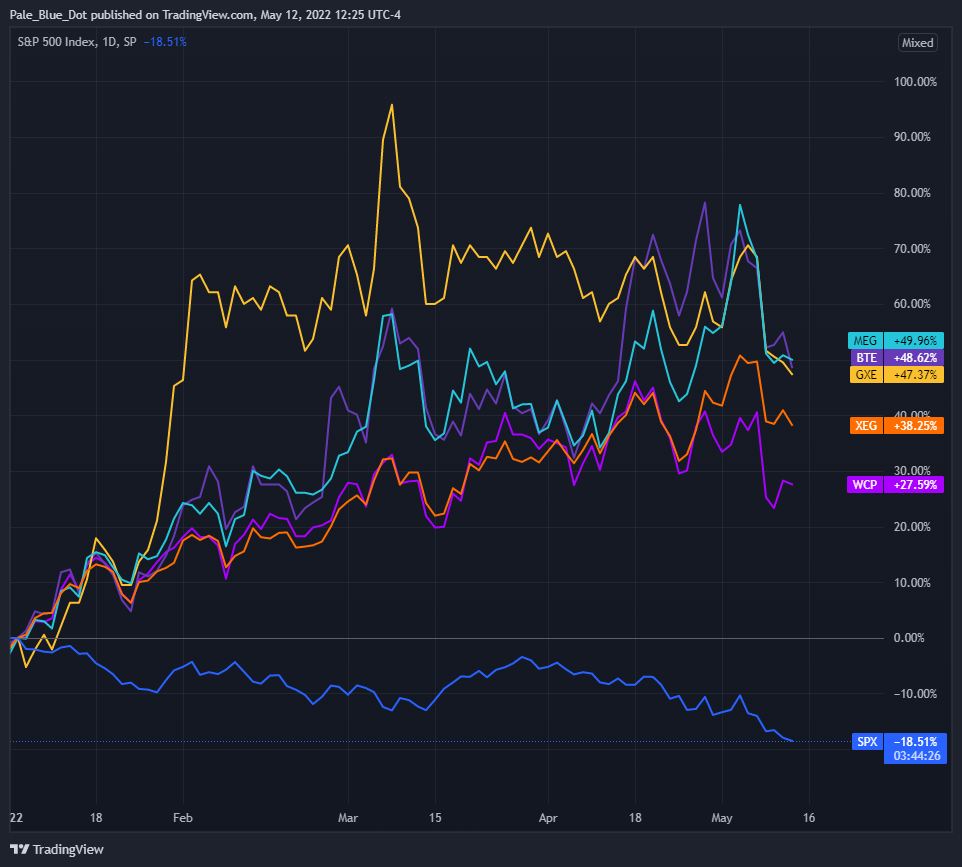
All of that being said, energy stocks will not be immune to market volatility and there will be bumps along the way to expected returns. My strategy has been to avoid trading too much and simply buy and hold these positions, keeping some cash in reserve to average down during corrections. In the event of a recession we might see a prolonged draw down in oil prices and I’m therefore keeping a close eye on real-time oil demand and economic growth variables. In the event of elevated recession risk, I will pare down the position sizing but for now end-demand for products seems to be quite robust as evidenced by crack spreads.
Uranium equities have been a lot harder to manage. Given the much smaller market cap (<$40bn market cap of the entire sector!) uranium stocks have been quite volatile with many of the smaller mining companies experiencing 8-10% daily swings. Given the temperamental nature and higher market correlation of these assets, I’ve had more of a trading approach where I shift risk between cash, low-beta exposure (Sprott physical trust) and higher-beta exposure (miners) depending on where I see markets going in the short / medium term. For example over the last few months I’ve been quite bearish on the broader market and have therefore been overweight on the physical trust and underweight on the miners. My favorite uranium miners include Nexgen, Denison Mines, Global Atomic Corp. I also own some long-term (2023) call options on the uranium ETF URA. In March I wrote:
While I do own some uranium equities (NexGen, Denison Mines, Global Atomic and ISO Energy), my largest position is in the commodity itself through the Sprott Physical Uranium Trust. The last bull market saw uranium spot prices rise to $140 / lb. I believe we could go much higher this time given the various structural tailwinds for the sector.
So far this year that strategy has worked with the physical trust (ticker: U.UN) outperforming both the SPX as well as the miners which are down 20-30%. I think holding an overweight position in U.UN continues to make sense given my bearish views on the market and the uranium miners continuing to exhibit high beta characteristics. If we did get a market crash or some kind of capitulation move I’ll look to rotate into the miners and add more to URA call options.
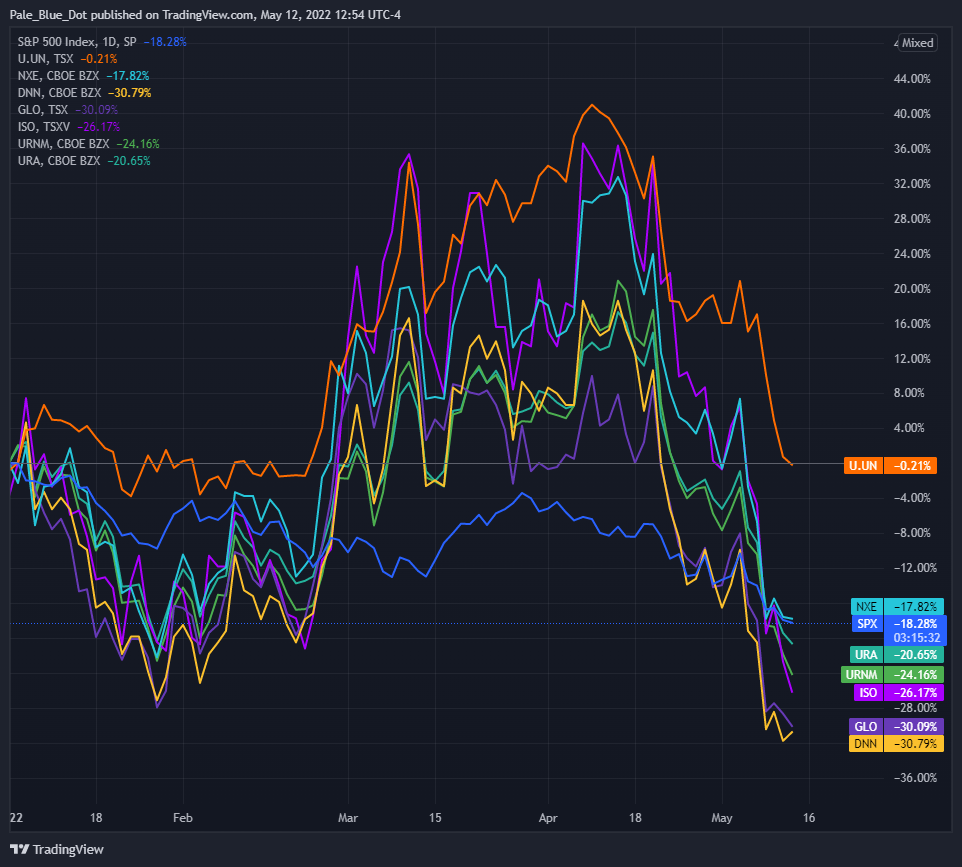
Despite the sharp draw downs in uranium equities, the fundamental thesis for uranium which I’ve laid out multiple times here, here and here is still intact. Nuclear is the only practical path towards the world’s growing energy needs in a sustainable manner and the world remains highly under-invested in uranium production. With utilities running low on inventories, we’re coming close to the start of a contracting demand cycle which will lead to much awaited price discovery for the commodity. A ban on enriched uranium from Russia would add further pressure on uranium prices as it increases demand for U3O8 from Western enrichers and reduces ‘secondary’ supply from underfeeding. Based on recent comments at the Cameco earnings conference, it seems clear that “origin risk” is on top of mind for utilities and that Western uranium suppliers will be the long-term beneficiaries. My uranium positions are currently 30% weight in the portfolio.
Lastly I had written about taking on a long position in gold in the middle of March as a shorter-term trade. I was stopped out of the trade last week on Monday when the June futures contract broke below my stop-loss trigger at $1875. I had mentioned that this was a lower conviction trade so I had a small position size and lower risk tolerance. I do remain constructive on gold price in the longer term, especially in light of the meltdown in crypto assets, but I’m going to wait and observe price action before taking another stab at going long. It appears at the moment that gold is being puked out along with all other risk assets. Will have to wait for some signs that gold has de-coupled from the broader markets before making a move.
Allocation summary:
45-50% - Oil / Gas
25-30% - Uranium
5% - Deep OTM put options on QQQ, SPY and ARKK
15 - 25% - Cash