Iran Re-Escalation
The chickens have come home to roost

There have been several significant geopolitical/macro developments since my last update and it’s a good time to take stock of where we stand, and how I’m positioning my portfolio going forward. There is a lot I got right about the big picture over the last few months, but also a lot I got wrong:
I was correct that the Iran war would not be a quick affair, but rather a prolonged conflict which would increase in complexity and scope as it dragged on.
I was correct that Iran would not compromise over its control of the Strait of Hormuz and the nuclear issue, given the need for a strong deterrent against future US / Israel attacks.
I was correct in pointing out that all the best barrel counters are expecting massive oil inventory draws, and that the world will be left with a thin margin of safety if the Strait does not return to normal almost immediately.
I was wrong about the price action in oil and broader markets, as well as the timing of the MOU signing:
China decided to drastically reduce its imports of oil (4-5mm b/d YoY), helping spot oil to balance at a lower price than I had initially expected.
The White House conducted a masterclass in narrative control, creating a VaR shock that made it nearly impossible for traders to hold long futures positions in oil.
Iran decided to sign the MOU much earlier than I expected; given how fast the US was drawing its SPR, my base case was that Iran would continue its delay tactics longer to get more favorable terms.
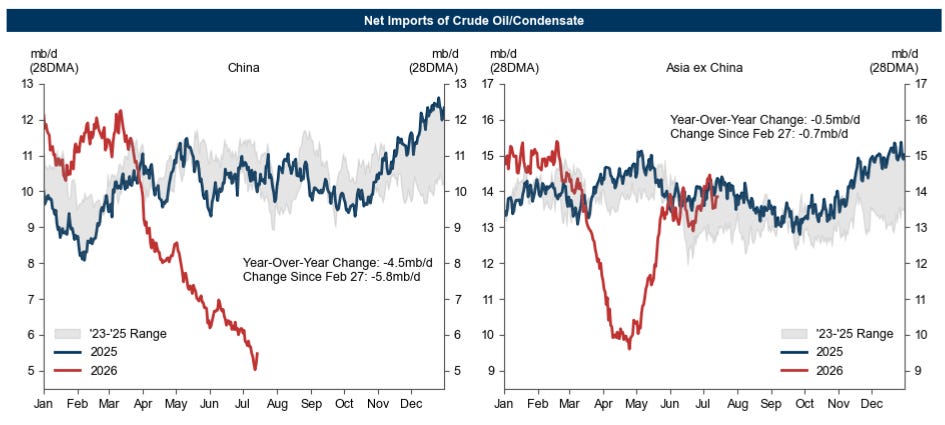
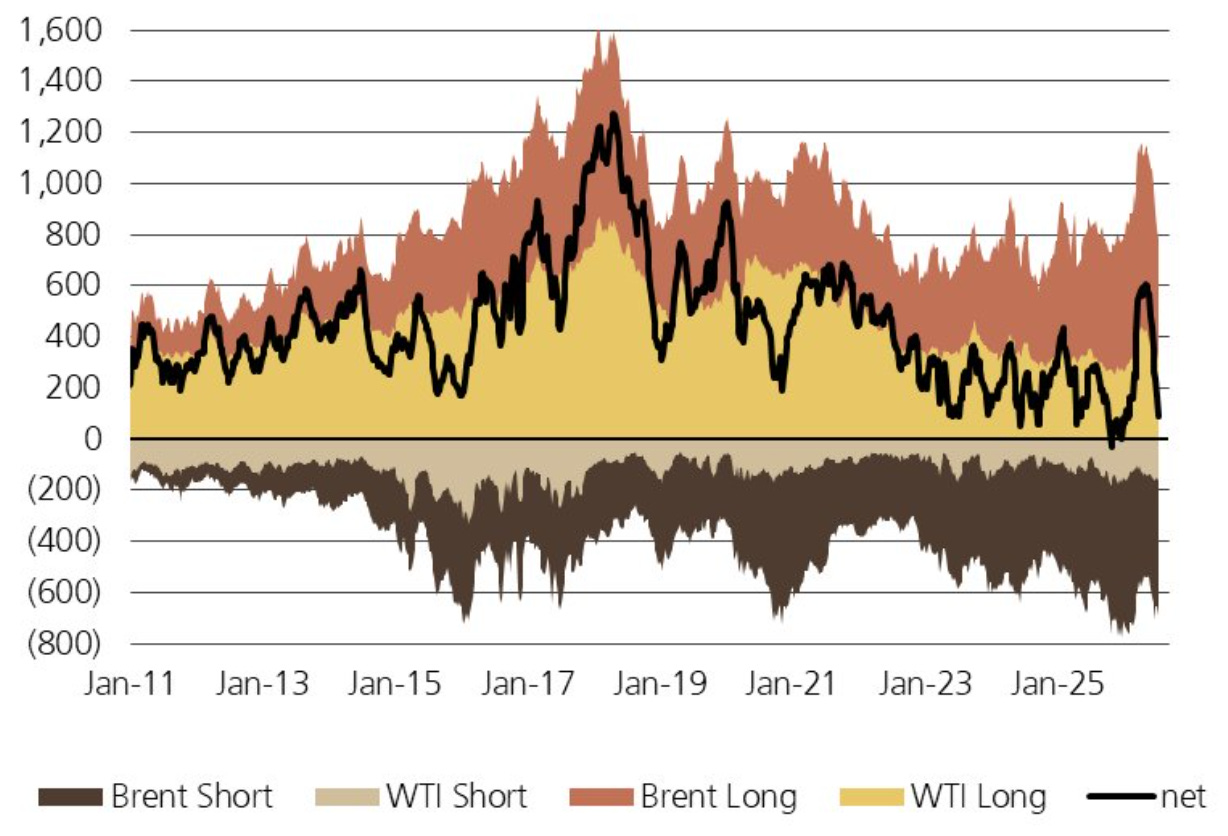
The combination of China bailing out the physical market and trapped barrels escaping Hormuz created a ‘mini glut’, crushing oil market positioning and leading to a cascade of selling in futures. Oil positioning has now become very washed out.
With oil making lower highs throughout May and June, I decided I would not be adding to my BNO and Ag calls (wheat, sugar) until the price action changed. As a result, I took a loss but survived to fight another day because of disciplined position sizing.
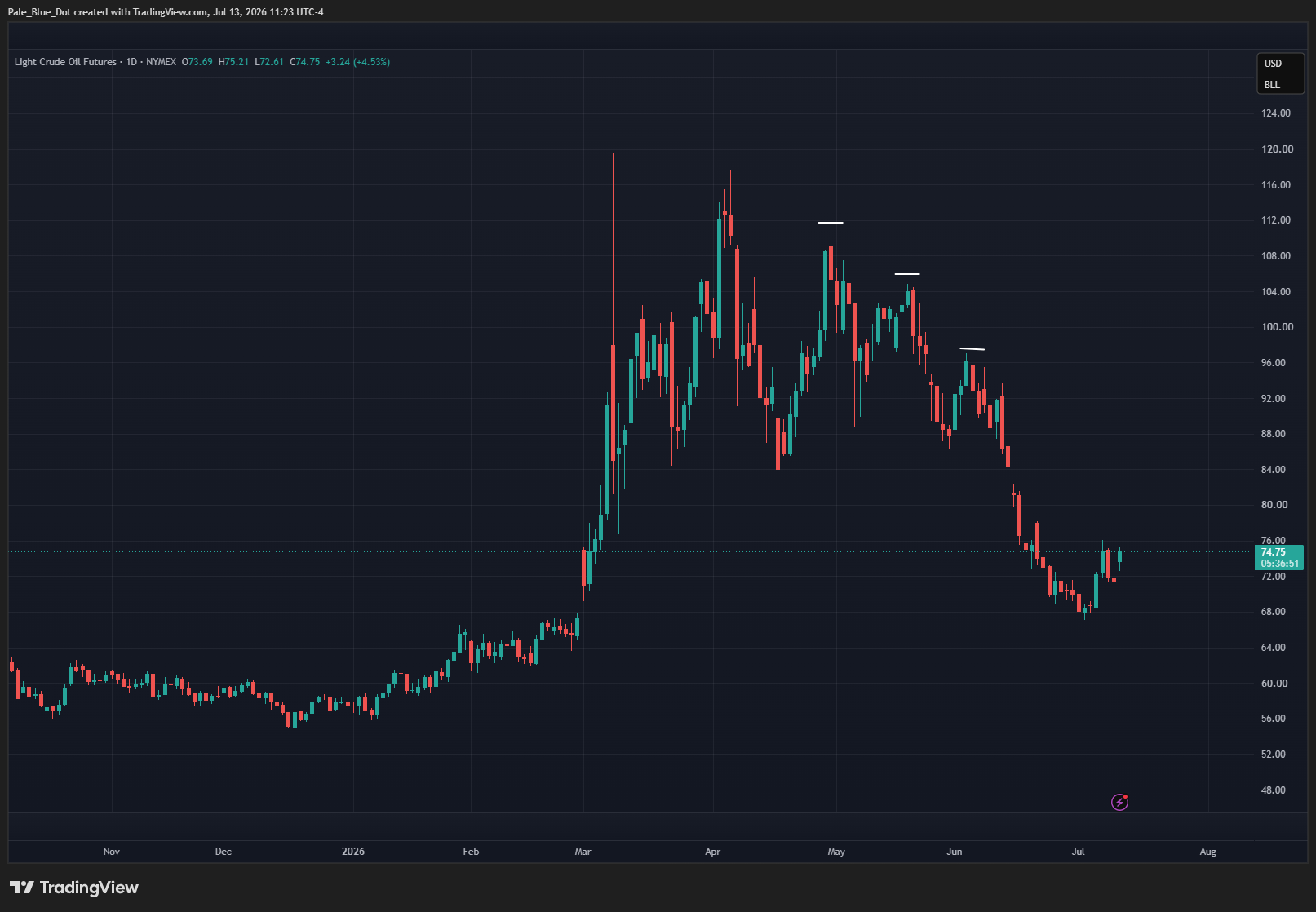
As a side note, this demonstrates an important point about risk management: a younger version of myself would have fought the price action and potentially doubled or tripled down on the trade, leading to a much bigger drawdown. However, after more than a decade in the financial markets, I have thankfully learned the importance of not letting one’s ego get in the way of capital preservation.
With positioning washed out and oil back to pre-war levels, the onus is now on the bears to prove that the Strait will normalize, that inventories can be rebuilt, and that oil can sustain the current price levels under the new status quo. This is where I think the set up gets quite interesting: by frontrunning the MOU and pricing in a complete normalization, the risk / reward in oil is a lot more asymmetric than a couple of months ago when oil was trading in triple digits, and inventories were at higher levels.
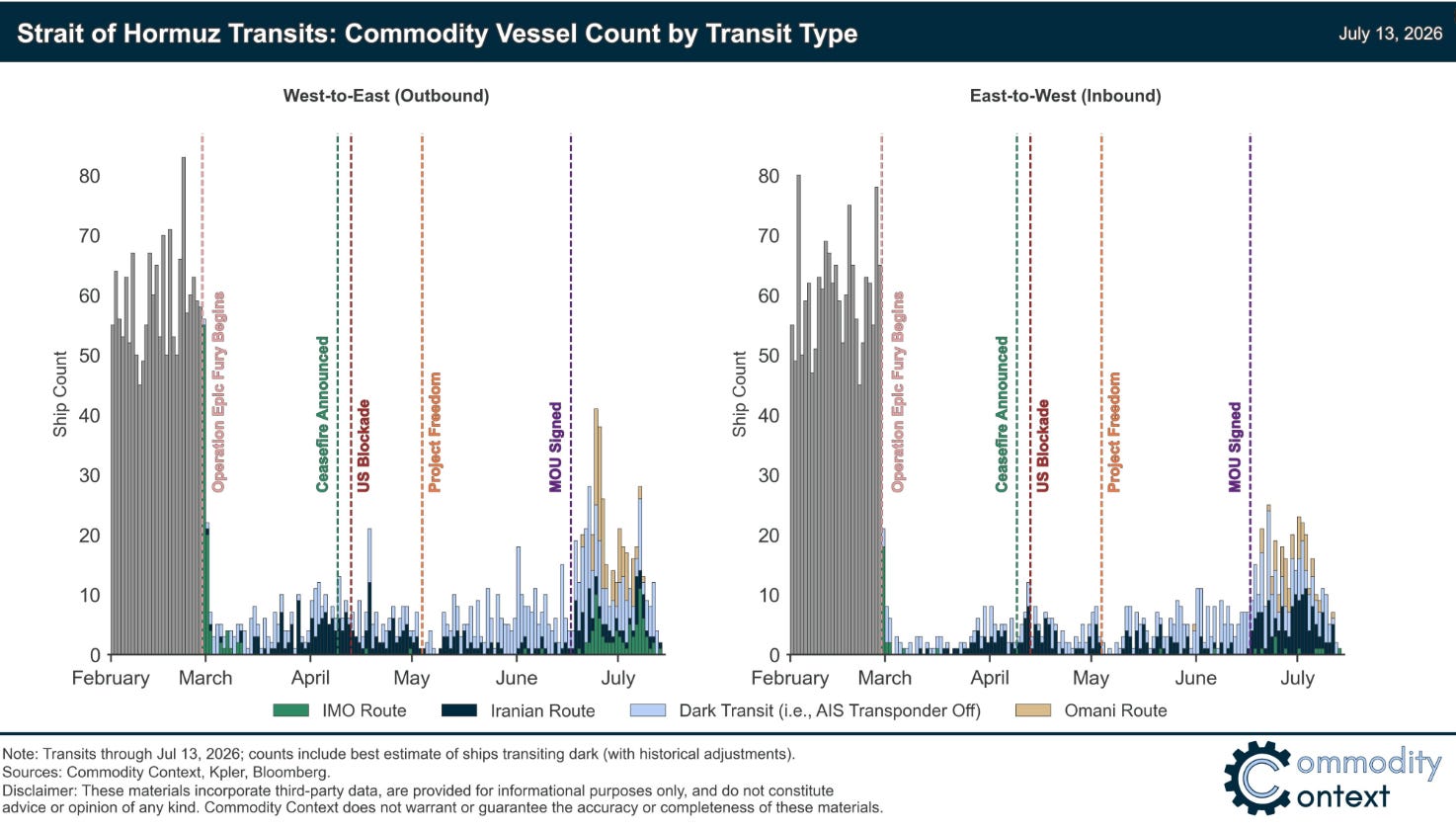
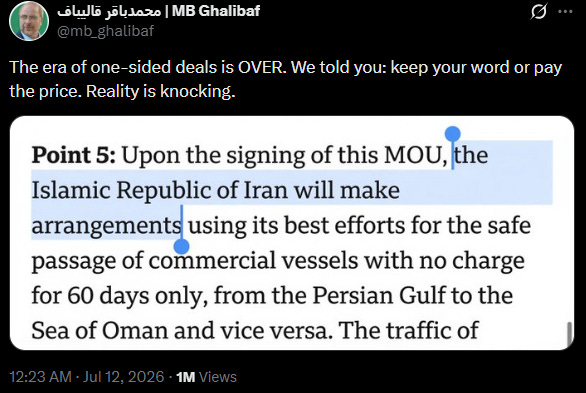
In my mind the MOU marked the start of the next phase of the war, even as the market priced it as the end. The US’ willingness to let Iran administer the Strait of Hormuz in partnership with Oman (point # 5 of the MOU) is a bitter pill, and one that the US is struggling to swallow as the balance of power implications are clear.
As I wrote in my earlier post, giving Iran control of the Strait makes it the most powerful oil producer in the world due to its effective veto over oil exports from the region. I wrote:
If we accept that the current Iranian regime is not willing to give up its enriched uranium, nor its control of the Strait of Hormuz, then it becomes clear that any deal with the current regime will be fragile, as it will completely alter the balance of power in the region.
With the SPR running low and domestic political pressure to end the war rising, Trump accepted this language in the MOU to get the deal over the finish line, but hoped that Iran would look the other way as it escorted commercial traffic through the Omani Lane. By allowing ships to bypass the the marine traffic control system set up by Iran under the Persian Gulf Strait Authority (PGSA), the US aimed to erode Iran’s key point of leverage.
This was clearly a miscalculation, as the US underestimated Iran’s resolve to hold the US accountable for the commitments made under the MOU. The chickens have now come home to roost, as the string of strategic errors has landed us in a spot where inventory buffers have been burned through, and Iran has once again decided to shut down the Strait. Iranian missiles have directly targeted both VLCCs being escorted by the US and ‘shuttle transfers’ that have been so crucial in getting oil out of the Strait the past few weeks. The Wall Street Journal wrote an excellent piece documenting this.
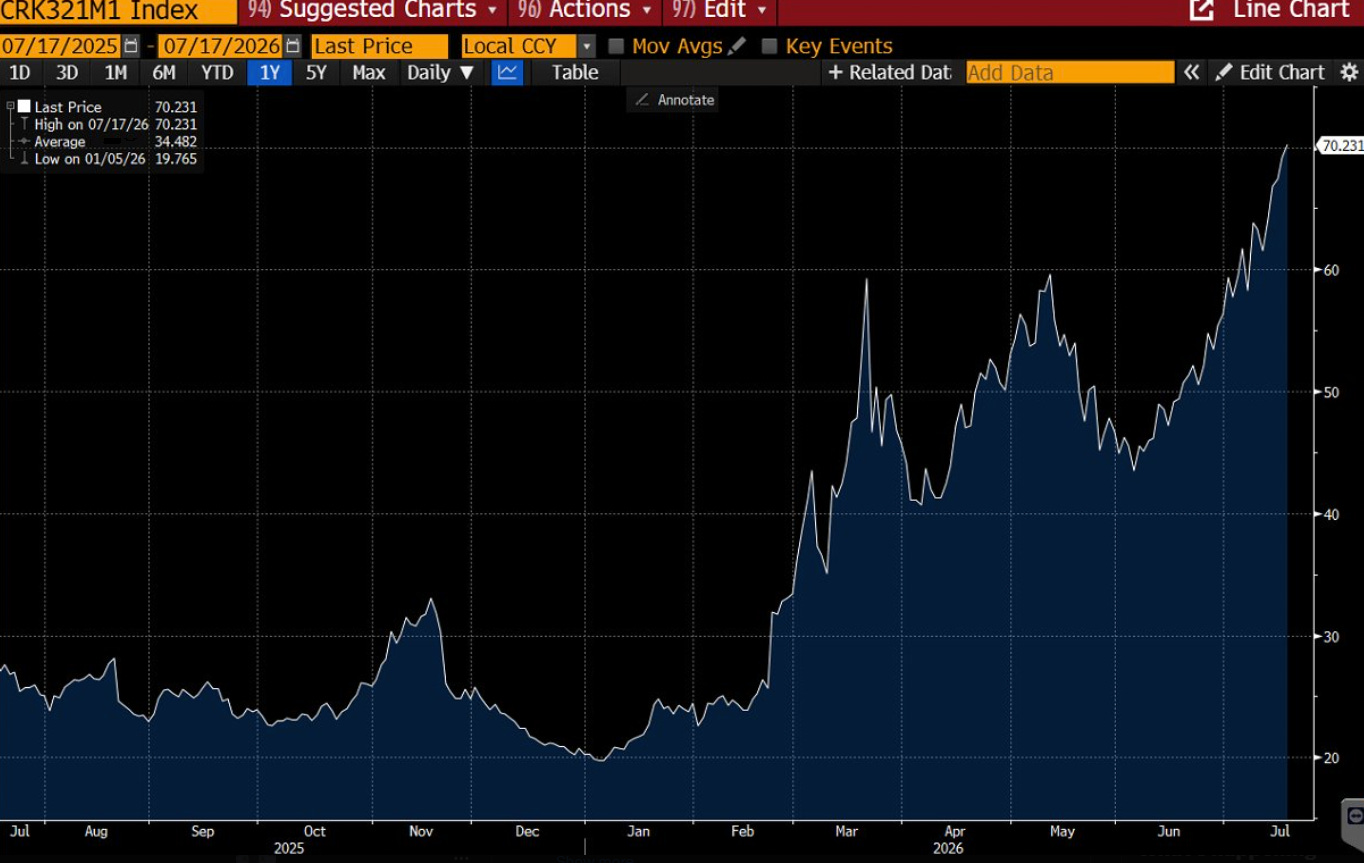
To make matters worse for the energy markets, crack spreads are hitting all-time highs due to a combination of low product stocks and constant hits to refining infrastructure (most notably Ukrainian attacks on Russian oil refineries, which have reportedly impacted 60% of Russian refining capacity). With China also lifting refined product export restrictions, it’s only a matter of time before the tightness flows through to the crude oil market.
The window for a diplomatic solution is looking increasingly narrow. With both the US and Iran hitting critical infrastructure, it looks like we have entered another ‘escalation trap’; i.e. both sides are trapped in a cycle of continuous escalation to try to break the other side’s resolve.
As I’ve mentioned previously, I believe this conflict is existential for Iran’s regime and I don’t expect them to surrender to military escalation. Due to Iran’s huge landmass and population of 93 million people, air strikes alone will not be enough to degrade the IRGC’s ability to strike back. The only solutions are to either cede control of the Strait to Iran or launch a full ground invasion. The former would significantly degrade US influence in the region, while the latter would be extremely risky and would almost certainly lead to significant US casualties. There is no easy way out.
Portfolio Positioning
I’m still holding my core long positions in EQ Resources ($EQR.AX), New Stratus Energy ($NSE.V), Calumet ($CLMT), Comstock ($LODE), Minera Alamos (now Mining Americas) ($MAI) and thermal coal equities (Terracom ($TER.AX), Whitehaven ($WHC.AX), New Hope ($NHC.AX), Core Natural Resources ($CNR)).
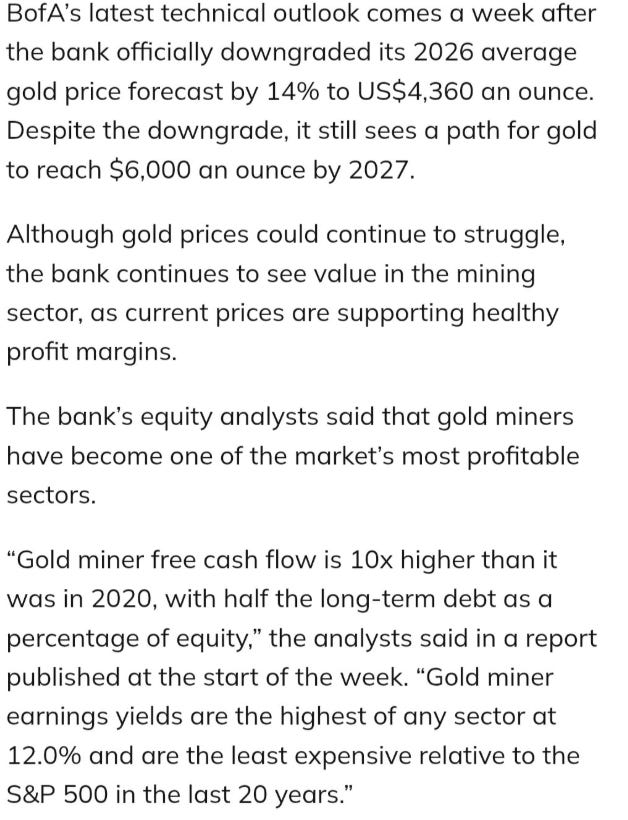
I’ve decided to exit Cerrado Gold ($CERT.V) due to the lack of communication regarding drill results at MDN, as well as another timeline extension for the Mont Sorcier Feasibility Study. While the company remains cheap on a cash flow basis, I’ve lost my patience with constantly shifting timelines / delays. The recent sell off in gold and gold equities has created buying opportunities in many other gold names that I’m excited to research. As a Bank of America research report stated recently, gold miners are historically cheap relative to cash flows and carrying strong balance sheets.
I think the uranium sector has also become interesting again. Term prices are close to triple digits while spot prices have stabilized in the mid-$80s. In contrast, most uranium stocks are down 40%+ from the peak at the start of the year, and sentiment is quite pessimistic. September to December is historically a strong period for uranium equities as the WNA conference in early September marks the start of contracting season for utilities. While the sector still looks firmly in a downtrend from a technical perspective, I think prices are attractive enough to start nibbling. I recently opened a risk reversal on Cameco ($CCJ) by selling $80 strike puts to fund $100 strike calls for January 2028 expiry.
For oil and the Iran War specifically:
I sold $65/60 put spreads on WTI a couple of weeks ago when oil prices closed the ‘Hormuz gap’ at around $67 / bbl.
I’ve already earned close to max gain on this position, but may consider rolling it forward to higher strikes.
I’ve bought BNO $50 calls for January 2027.
After getting burned on BNO calls earlier, I’m sizing these very small.
I’ve bought Suncor ($SU) calls for January 2028.
With crack spreads breaking records, oil prices back above $80 / bbl and management executing to a high standard, Suncor should be trading at a much higher valuation as an integrated major with decades of oil reserves.
I’ve entered into a calendar spread on WTI by going long the September contract, and shorting the December contract.
This is a lower-risk way to trade the potential for an oil price spike and increased backwardation vs. buying call options or going outright long the front month. This trade can also be leveraged a lot due to the low margin requirements.
The two contracts are currently at a $4 spread, but the spread spiked to as high as $10 in May.
Downside is limited by the fact that the oil market is unlikely to go into steep contango given the low inventory levels and high crack spreads.
Last but not least I’ve entered starter positions into a bunch of new names that I’m currently researching. Nothing much to say about these yet, but I will be writing a more in-depth piece if I build enough conviction to make them core holdings.
Andrew Forrest's (founder and Executive Chairman of Fortescue) investment company just bought out Oaktree's stake in EQR. After looking at what Fortesue does, I wonder if he is going to stop at owning just 16% of EQR.
https://www.fortescue.com/en/about-fortescue
Thanks for the update! Do have any concerns about EQR? Tungsten prices have remained very high, but EQR's share price is back to February levels. The mine in Portugal seems to be fully functional again and Mt Carbine seems to be running at a high level.